

Почему стоит выбрать промышленные солнечные батареи для вашего завода?
Решения для промышленных солнечных батарей обеспечивают заводам экономию средств, надежность работы и экологические преимущества. Руководители предприятий стремятся к эффективным энергетическим системам, которые снижают затраты и обеспечивают бесперебойное производство. Литиевая солнечная батарея Anern LiFePO4 Предлагает расширенные функции, разработанные для промышленного применения, направленные на удовлетворение важнейших энергетических потребностей и достижение целей в области устойчивого развития.
Инвестиции в промышленную солнечную батарею могут значительно снизить счета за электроэнергию за счет хранения избыточной солнечной энергии для последующего использования.
Использование промышленных солнечных батарей помогает заводам справляться с пиковыми нагрузками, снижая дорогостоящие расходы на электроэнергию в периоды высокого потребления.
Внедрение решений на основе солнечных батарей способствует достижению целей устойчивого развития за счет снижения выбросов углекислого газа и соблюдения экологических норм.
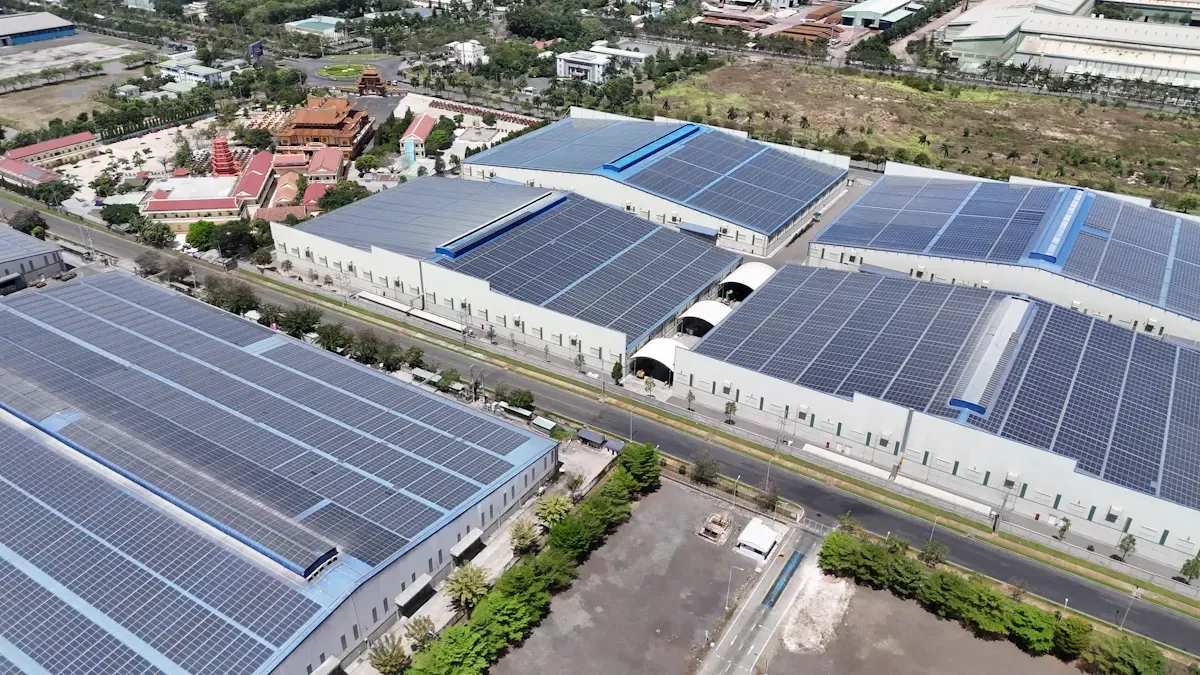
Заводы сталкиваются с высокими эксплуатационными расходами из-за постоянного потребления энергии. Промышленные солнечные батареи помогают снизить эти затраты, накапливая избыточную солнечную энергию в течение дня и подавая ее при увеличении спроса. Этот процесс позволяет заводам использовать меньше электроэнергии из сети, что снижает ежемесячные счета за электроэнергию. Многие предприятия выбирают установку аварийной аккумуляторной системы на 51,2 В, чтобы обеспечить достаточное количество энергии для критически важных операций. Эти батареи поддерживают широкий спектр применений, в том числе используются в качестве литий-ионных батарей для сельскохозяйственной техники, что дополнительно оптимизирует использование энергии в различных отраслях.
Модульная конструкция современных промышленных солнечных аккумуляторных систем позволяет заводам масштабировать системы хранения энергии в соответствии со своими потребностями. Руководители предприятий могут добавлять новые блоки по мере роста производства, обеспечивая экономически эффективное расширение. Длительный срок службы этих батарей означает меньшее количество замен и снижение затрат на техническое обслуживание в долгосрочной перспективе. В результате заводы получают значительную экономию, сохраняя при этом эффективность работы.
Совет: Инвестиции в промышленную солнечную батарею могут быстро окупиться за счет сокращения текущих расходов на электроэнергию.
Поставщики электроэнергии часто взимают с заводов дополнительные сборы в периоды высокого спроса. Эти сборы за пиковый спрос могут составлять значительную часть счета за электроэнергию завода. Промышленная солнечная батарея решает эту проблему, обеспечивая подачу накопленной энергии в часы пик. Этот процесс, известный как сглаживание пиковых нагрузок, снижает количество электроэнергии, потребляемой из сети, когда тарифы наиболее высоки.
Использование накопленной солнечной энергии позволяет заводам избежать дорогостоящих скачков потребления электроэнергии. Гибкость промышленные солнечные аккумуляторные системыБлагодаря возможности параллельного подключения нескольких блоков, даже крупные предприятия могут эффективно управлять своим спросом. Длительный срок службы этих батарей позволяет заводам полагаться на них годами, что еще больше повышает эффективность контроля затрат.
Ниже приведена сводная таблица, в которой выделены основные характеристики, области применения и преимущества промышленных солнечных батарей:
Особенность | Применение | Преимущества |
|---|---|---|
Модульность | Масштабируемые системы хранения энергии для заводов | Простота расширения, экономичность |
Длительный срок службы | Непрерывные производственные операции | Снижение затрат на замену |
Высокая совместимость | Интеграция с солнечной и сетевой энергетикой. | Гибкая системная конструкция |
Аварийное резервное копирование | 51,2 В соответствует требованиям аварийных аккумуляторных систем. | Надежное электроснабжение во время отключений электроэнергии. |
Универсальность | Литий-ионный аккумулятор для сельскохозяйственной техники | Широкий спектр применения |
Peak Shaving | Управление платой за потребление | Снижение затрат на электроэнергию |
Промышленные решения на основе солнечных батарей предложить заводам практичный способ контролировать расходы на электроэнергию, управлять пиковыми нагрузками и поддерживать различные промышленные и сельскохозяйственные приложения.
Заводы зависят от бесперебойного электроснабжения для поддержания работы производственных линий. Промышленная солнечная батарея обеспечивает резервное питание во время неожиданных отключений электроэнергии. При сбое в сети система автоматически подает накопленную энергию на критически важное оборудование. Эта функция предотвращает дорогостоящие простои и защищает чувствительное оборудование. Многие заводы используют конфигурацию аварийной батареи на 51,2 В, чтобы обеспечить достаточную емкость для основных операций. Такая конфигурация поддерживает не только производство, но и такие приложения, как литий-ионная батарея для сельскохозяйственной техники, которая требует надежного резервного питания в отдаленных районах.
Примечание: Надежное резервное электропитание помогает заводам избегать производственных потерь и поддерживать стандарты безопасности во время чрезвычайных ситуаций.
Эффективное управление энергией повышает производительность и сокращает потери. Усовершенствованная система управления батареями (BMS) Anern отслеживает уровень заряда и состояние батареи в режиме реального времени. BMS обеспечивает оптимальную производительность, балансируя поток энергии и предотвращая перезарядку или глубокий разряд. Сертификаты безопасности, такие как CE, ROHS и UN38.3, подтверждают соответствие батареи международным стандартам. Не требующая обслуживания конструкция позволяет руководителям предприятий сосредоточиться на производстве, не беспокоясь о частом обслуживании. Промышленные солнечные аккумуляторные системы с модульной конструкцией адаптируются к меняющимся потребностям в энергии, что делает их подходящими как для крупных заводов, так и для сельскохозяйственных предприятий.
Основные преимущества оптимизированного управления энергопотреблением:
Бесперебойное электропитание для критически важных нагрузок
Повышенная безопасность и надежность
Минимальные требования к техническому обслуживанию
Заводы, инвестирующие в эти решения, обеспечивают стабильную работу и долгосрочную эффективность.
Заводы играют важную роль в мировом потреблении энергии. Они часто ищут способы минимизировать свое воздействие на окружающую среду. Внедрение промышленных солнечных батарей позволяет руководителям снижать зависимость от ископаемого топлива. Батарея накапливает чистую солнечную энергию и подает ее в рабочее время. Этот процесс снижает выбросы парниковых газов и способствует достижению целей устойчивого развития. Многие предприятия используют аварийную батарею на 51,2 В для обеспечения резервного электропитания без увеличения выбросов углекислого газа. Сельскохозяйственные предприятия получают выгоду от использования литий-ионных батарей для сельскохозяйственной техники, которые обеспечивают эффективное энергоснабжение и снижают загрязнение окружающей среды в сельской местности.
Совет: Переход на системы хранения солнечной энергии помогает заводам соответствовать международным климатическим инициативам и демонстрировать корпоративную ответственность.
Государственные органы устанавливают строгие экологические стандарты для промышленных предприятий. Заводы должны соблюдать эти правила, чтобы избежать штрафов и сохранить свою репутацию. Солнечные батареи Anern имеют такие сертификаты, как CE, ROHS и UN38.3. Эти сертификаты подтверждают безопасность, экологическую совместимость и соответствие мировым стандартам. Руководители выбирают сертифицированные решения для выполнения требований законодательства и упрощения проверок. Не требующая обслуживания конструкция батареи сокращает количество опасных отходов и способствует соблюдению законов об устойчивом развитии.
Основные преимущества соблюдения нормативных требований:
Сертифицировано по стандартам безопасности и защиты окружающей среды.
Оказывает поддержку при проведении регуляторных проверок и подготовке отчетов.
Снижает риск штрафов и сбоев в работе.
Сертификация | Цель | Преимущества соблюдения нормативных требований |
|---|---|---|
CE | Безопасность и качество | Соответствует стандартам ЕС. |
РОХ | Экологическая безопасность | Ограничивает содержание опасных веществ |
ООН38.3 | Безопасность на транспорте | Обеспечивает безопасную транспортировку батареи. |
Заводы, инвестирующие в сертифицированные солнечные батареи, достигают как экологической устойчивости, так и соответствия нормативным требованиям.
Заводы получают экономию средств, надежное резервное питание и экологичность благодаря промышленным солнечным батареям. Передовые технологии Anern способствуют долгосрочному успеху. Лица, принимающие решения, могут внедрять такие решения, как аварийная батарея на 51,2 В или литий-ионная батарея для сельскохозяйственной техники, чтобы достичь энергетической независимости и удовлетворить будущие потребности.
Промышленная солнечная батарея накапливает солнечную энергию для заводов. Она обеспечивает резервное электропитание, снижает затраты на электроэнергию и поддерживает критически важные операции во время отключений электроэнергии.
Аварийная батарея на 51,2 В обеспечивает надежное резервное электропитание. Она гарантирует бесперебойную работу производственных линий во время отключений электроэнергии или в периоды пиковой нагрузки.
Да. Литий-ионный аккумулятор для сельскохозяйственной техники обеспечивает стабильное энергоснабжение. Он поддерживает работу техники в отдаленных районах и сокращает время простоя.

Электронная почта : g-ad@anern.com
Добавлять :5th Floor, Building B, No.2817 Kaichuang Avenue, Science Zone, Huangpu District, Guangzhou, China


Anern Industry Group Limited Все права защищены
.Xml | политика конфиденциальности  ПОДДЕРЖИВАЕТСЯ СЕТЬЮ
 Язык
Язык


